
COMFORT & SEDATION DENTISTRY
Feel at ease.
Get the dental care you need.
Dental anxiety, sensitivity or a complex treatment plan shouldn’t keep you from taking care of your smile. Explore personalized sedation options designed to help make dental treatment calmer and more comfortable at Austin Institute of Dental Medicine.
Clinically reviewed by Dr. Ahmed Sabbah, DDS, PhD, AEGD Program Director and Dr. Dhir Patel, DDS, Pediatric Dentist · Last reviewed November 25, 2026
Comfort & Sedation At AIDM®
Dental care designed around your comfort.
For some patients, even a routine dental appointment can feel overwhelming. Others may need longer or more complex procedures and simply want a more comfortable treatment experience.
Sedation dentistry can help reduce anxiety and make it easier to receive the dental care you need.
At AIDM®, we offer multiple levels of dental sedation, allowing your clinical team to recommend an approach based on your health, anxiety level, treatment needs and the complexity of your procedure.
Benefits
A more comfortable way to experience dentistry.
01
Reduce Dental Anxiety
Sedation can help patients who feel nervous, fearful or overwhelmed about dental treatment feel more relaxed.
02
Improve Comfort
Create a calmer treatment experience during routine, restorative or more complex dental procedures.
03
Complete More Treatment
For appropriate patients, sedation may make it possible to complete multiple procedures during the same visit.
04
Personalized Sedation
Different levels of sedation allow your care team to select an option appropriate for your treatment and comfort needs.
05
Carefully Monitored Care
Our clinical team follows established sedation protocols and monitors patients throughout treatment when sedation is used.
Sedation Options
Find the right level of comfort for your care.
Not every patient needs the same type of sedation. Your clinical team will review your medical history, procedure and concerns before recommending an appropriate option.

Nitrous Oxide
Often called “laughing gas,” nitrous oxide provides mild relaxation while allowing you to remain conscious and responsive.
It begins working within minutes and wears off quickly after treatment.
May be appropriate for:
- Mild to moderate dental anxiety
- Patients who want light relaxation
- Shorter or less complex procedures
- Patients who prefer minimal lingering effects

Oral Conscious Sedation
For patients who need a deeper level of relaxation, prescribed oral medication may be taken before treatment.
You remain conscious but deeply relaxed, and some patients have limited memory of their procedure afterward.
May be appropriate for:
- Moderate to severe dental anxiety
- Longer appointments
- Multiple procedures performed during one visit
- Patients who need greater relaxation than nitrous oxide provides
Because the effects last longer, you will need someone to drive you to and from your appointment.
IV Sedation
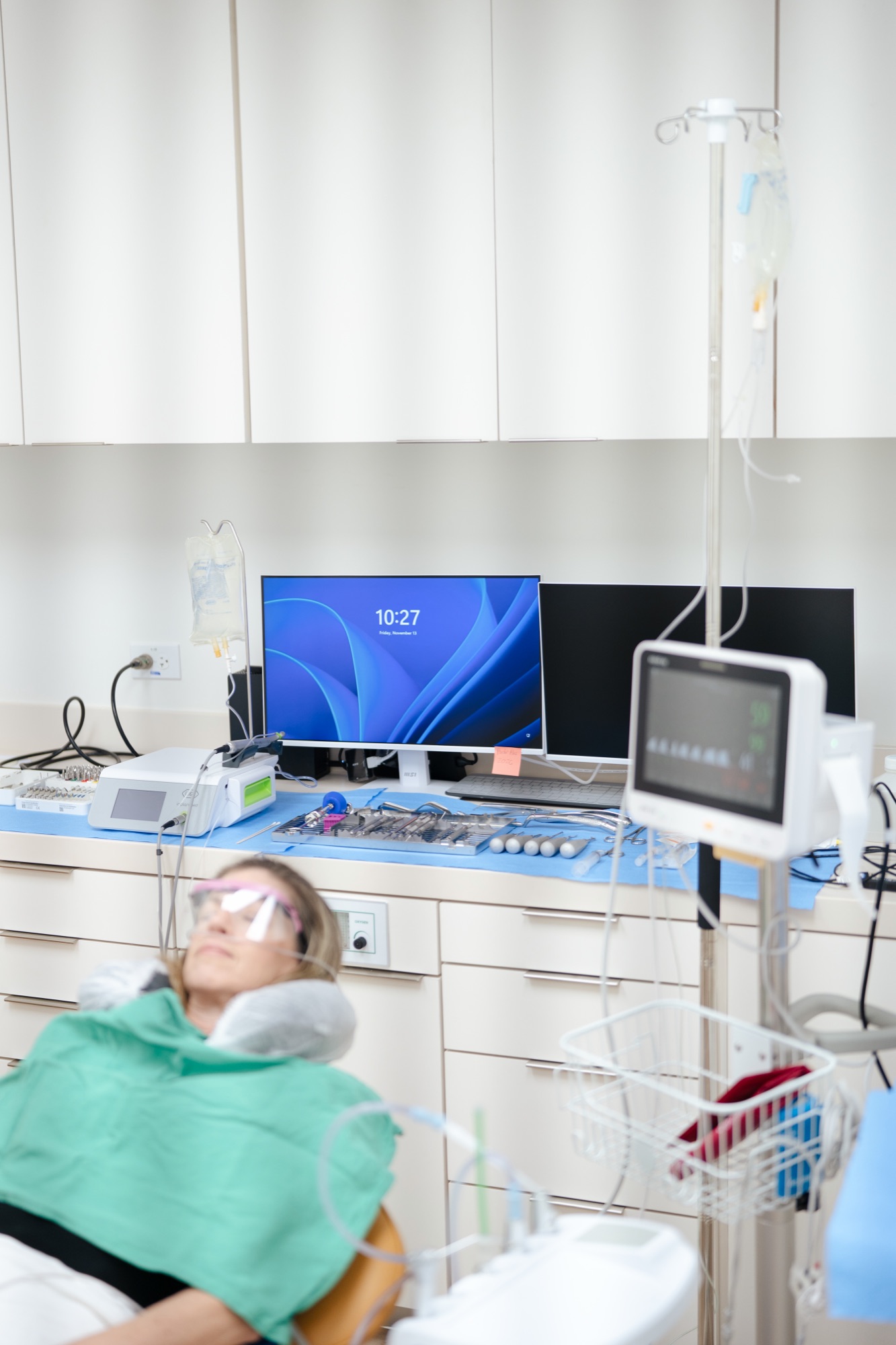
IV sedation delivers medication directly into the bloodstream, allowing the clinical team to carefully control the level of sedation throughout treatment.
Patients enter a deeply relaxed state and may remember little or nothing about their procedure.
Features include:
- Rapid onset
- Precisely controlled medication
- Continuous monitoring of vital signs
- Deep relaxation during treatment
- Little to no memory of the procedure for many patients
IV sedation may be considered for patients with significant dental anxiety or those undergoing extensive treatment.
Candidacy
Could sedation dentistry be right for you?
Sedation dentistry may help patients who have difficulty receiving dental treatment comfortably. Your clinical team will evaluate your medical history, medications and planned treatment before determining whether sedation is appropriate.

Dental Anxiety
Feel calmer when fear or anxiety makes dental appointments difficult.

Complex Treatment
Make longer or more involved dental procedures easier to manage.

Multiple Procedures
Sedation may allow appropriate patients to complete more treatment during fewer visits.

Previous Difficult Experiences
A personalized comfort plan may help patients who have avoided dentistry because of previous experiences.

Difficulty Sitting Through Treatment
Sedation can help some patients remain comfortable during longer appointments.

Special Care Needs
Patients with special care needs can be evaluated for an appropriate sedation plan, including pediatric oral and IV sedation.
The process
What to expect with sedation dentistry at AIDM®.
Your comfort plan begins before your procedure.
01
Schedule your evaluation
Tell us about your treatment needs, dental concerns and any anxiety you experience.
02
Review your health history
Your care team reviews your medical history, medications and other relevant factors before recommending sedation.
03
Select the appropriate option
Depending on your needs, treatment may involve nitrous oxide, oral conscious sedation, IV sedation or another appropriate approach.
04
Prepare for your appointment
We provide specific instructions before treatment, including whether you need to adjust eating or drinking and arrange transportation.
05
Receive treatment with monitoring
Your clinical team monitors you throughout the procedure according to the sedation method being used.
06
Recover and follow instructions
Recovery varies depending on the type of sedation. We will explain what to expect and provide appropriate post-treatment instructions.
Related Care
Comfort is part of your overall wellness.
Dental anxiety is one reason patients may struggle to receive necessary care, but jaw discomfort, sleep problems and bite-related concerns can also affect everyday wellness.
Sleep & Airway Care
Dental solutions for appropriate patients with sleep-disordered breathing.
Sedation Dentistry at AIDM®
See our approach to Sedation Dentistry care
Learn more about the team, technology and personalized approach behind sedation dentistry care at AIDM®.
A different standard of dental medicine
Featuring our clinical faculty
Why AIDM®
Dental care that looks beyond a single tooth.
Your oral health, bite, jaw function, airway and overall wellness are interconnected.
AIDM® brings comprehensive dental care together with modern diagnostic technology and coordinated treatment planning.
Multiple Comfort Options
From mild nitrous oxide to deeper sedation approaches, care can be adapted to your needs.
Digital Evaluation
Modern imaging and scanning technology can help evaluate your teeth, bite, jaw and airway.
Coordinated Care
When your needs extend beyond one area of dentistry, care can be coordinated across the institute.
Personalized Treatment
Recommendations are based on your health, symptoms, diagnosis and individual treatment goals.
“This was my first visit, and I had an amazing experience! Everyone was incredibly thorough during my consultation and took the time to explain all of the treatment options available for my situation. Dr. Bruneman was wonderful, and I…”
“Super grateful for my smooth experience at The Austin Institute of Dental Medicine. Shout out to the wonderful Dr. Qadi for her amazing work, attention to detail and professionalism. Her assist Tammy did a great job of ensuring my comfort…”
“Exceptional Care, Compassion, and Professionalism! I cannot express enough gratitude for the exceptional care my father received at Austin Institute of Dental Medicine. From the very first phone call to schedule an urgent appointment…”
“My main dentist was amazing and there were multiple professionals checking everything and making sure I got what I needed, everything was very clear, on pricing and communication. Great dental office, every staff member was very nice. I…”
“I was nervous an excited to go at the same time because I've been wanting my teeth fixed but I did not know what to expect. From the reception desk to Dr Dylan c McMahan both made me feel very welcoming and did a great job with my x-rays…”
“Dra. Guerrero and Tamy were awesome! Will definitely be back”
“I had such an amazing experience getting all four of my wisdom teeth extracted!! Stephanie Guerrero was amazing and made sure I was taken care of the entire way through, while answering all my questions, since it was my first time going…”
“Thank you very much to everyone, beautiful staff, excellent experience, and a giant thank you to Tammy, I didn't know I needed you until you showed up.”
“So nice, friendly and well educated versus other orthodontists that my daughter has been too. Thank you for seeing what others didn't. Would recommend this place to anyone in the Austin area.”
“I had a great experience with Dr. Nick Perron at AIDM! I got my braces here, and I couldn’t be happier with the care I received. Dr. Perron is very professional, knowledgeable, and genuinely cares about his patients. He always made sure I…”
“Dr.kalamchi,Dr.elhassan,Dr.apolonio, all did a wonderful job fixing my root canal and cleaning my teeth, took there time to make sure everything was done to perfection I greatly appreciated that”
“Dr. Yoo and his assistant Tammy were absolutely amazing. They walked me through the process of everything very well and were also incredibly professional.”
Comfort Options
Nitrous oxide, oral or IV sedation?
Your clinical team will evaluate your medical history, medications and planned treatment before determining whether sedation is appropriate.
| Nitrous oxide | Oral conscious sedation | IV sedation | |
|---|---|---|---|
| How it’s given | Inhaled (“laughing gas”) | Prescribed oral medication taken before treatment | Medication delivered directly into the bloodstream |
| Level of relaxation | Mild relaxation; you remain conscious and responsive | Conscious but deeply relaxed; some patients have limited memory of the procedure | Deeply relaxed; patients may remember little or nothing of the procedure |
| May be appropriate for | Mild to moderate anxiety; shorter or less complex procedures | Moderate to severe anxiety; longer appointments; multiple procedures in one visit | Significant dental anxiety or extensive treatment |
| Onset and recovery | Begins working within minutes and wears off quickly | Effects last longer: someone must drive you to and from your appointment | Rapid onset; precisely controlled; vital signs continuously monitored |
This comparison provides general information and is not a treatment recommendation. Suitability, timeline and outcome depend on individual clinical factors. Final treatment and fees are confirmed after clinical evaluation.
Common Questions
Common questions about sedation dentistry at AIDM®
What is dental anxiety and how can AIDM® help?
Dental anxiety may come from a difficult experience, fear of discomfort, a strong gag reflex, or feeling unsure about treatment. Tell us what worries you. We can explain each step, discuss comfort options, and agree on a signal for a pause when you are able to communicate. You do not have to feel embarrassed about being nervous.
What is sedation dentistry?
Sedation dentistry uses medication to help you feel calmer during dental treatment. It can support care for people with anxiety, difficulty tolerating procedures, or longer treatment needs. Sedation and numbing medicine serve different purposes: sedation helps with relaxation, while local anesthesia numbs the treatment area.
What sedation options are available at AIDM®?
AIDM® offers nitrous oxide, oral sedation, and IV sedation for appropriate patients. Nitrous oxide is inhaled through a nose mask; oral sedation uses prescribed medicine taken by mouth; IV sedation delivers medicine through a small line in a vein. Sedation at AIDM® is provided by Dr. Ahmed Sabbah, who holds the required sedation permits. Your dentist will explain which options are available for your age, health, and planned treatment.
What is nitrous oxide or laughing gas?
Nitrous oxide is mixed with oxygen and breathed through a mask over your nose. It usually helps you relax while staying awake and able to respond. Its effects generally wear off quickly after it is stopped. It may help with mild anxiety, but it may not be enough for every patient or procedure.
How do oral sedation and IV sedation differ?
Oral medication takes time to work, and its absorption varies between patients. IV medication generally works faster and can be adjusted in small amounts during treatment. Either method can cause drowsiness and affect memory. Neither is automatically safer or better for everyone; the choice depends on your health, the intended sedation level, and the procedure.
Will I be asleep or remember the procedure?
Not necessarily. With minimal sedation, you remain awake. With moderate sedation, you are drowsy but can respond to instructions. Deeper sedation reduces responsiveness and may require help with breathing. IV describes how medicine is given, not a specific depth of sedation. Some people remember little afterward, but complete sleep or loss of memory cannot be promised. Your provider will explain the intended level.
Will I still need numbing injections?
Usually, yes. Sedation does not replace local anesthesia for procedures that require numbing. Your dentist may use both to help manage anxiety and discomfort. Some pressure or movement may still be noticeable. Tell the team if you feel uncomfortable so your care can be adjusted.
Is sedation dentistry safe?
Sedation has risks, even when carefully planned. Possible effects include nausea, dizziness, prolonged drowsiness, changes in blood pressure, and breathing problems; serious complications can occur. A health review, appropriate provider training, and recovery supervision help reduce risk. During oral and IV sedation, your oxygen level, heart rate, and blood pressure are monitored throughout treatment. Your provider will discuss your individual risks and alternatives before you consent.
Who may need additional evaluation before sedation?
Tell us about sleep apnea, heavy snoring, heart or lung disease, diabetes, liver or kidney disease, medication allergies, and previous anesthesia problems. These conditions do not automatically rule out sedation. They may change the plan, require coordination with your physician, or make another care setting more appropriate. Let us know about a new illness before your appointment.
Can sedation help with a strong gag reflex?
Sometimes. Sedation can help some people relax enough to tolerate treatment, but it may not eliminate a gag reflex completely. Nitrous oxide is often tried first. Tell us about your gag reflex at your evaluation so we can recommend the right approach, which may also include changes to technique, positioning, or pacing.
Can children receive sedation dentistry?
Some children benefit from sedation, but the plan must account for age, development, health, airway, and treatment needs. Nitrous oxide may be appropriate for some children; others need specialized pediatric sedation or anesthesia care. IV sedation is not automatically excluded because a patient is a child. Ask AIDM® which services are available for your child and whether a referral is needed.
Can I receive dental treatment or sedation during pregnancy?
Tell us if you are pregnant or may be pregnant. Preventive and necessary dental treatment, including local anesthesia, can generally be provided throughout pregnancy. Do not delay care for pain or infection without advice. Sedation requires a separate assessment with your prenatal care provider; elective sedation may be postponed. Whether nitrous oxide is appropriate during pregnancy should be decided with your dentist and prenatal care provider.
How should I prepare for a sedation appointment?
Follow the written instructions provided for your specific plan, including when to stop eating or drinking. Share all prescriptions, over the counter medicines, supplements, alcohol use, and cannabis or other substance use. Ask which medicines to take that day, especially diabetes or weight loss medicines. Do not stop prescriptions or take extra sedatives on your own. Contact us if any instruction is unclear.
Will I need someone to drive me home?
For oral or IV sedation, arrange for a responsible adult to accompany you home and supervise you as instructed. If you take sedating medication before arrival, arrange transportation to the appointment too. A rideshare alone is not a substitute for an escort. After nitrous oxide alone, some patients may drive once fully recovered and cleared by the treating provider.
How long does recovery take?
Recovery depends on the medicines, sedation level, your health, and the treatment. Oral and IV sedation can affect judgment and coordination after you feel awake. Plan to rest for the remainder of the day. Avoid driving, machinery, alcohol, and important decisions for the period in your discharge instructions, often at least 24 hours after oral or IV sedation. Resume activities only as directed.
Can several dental procedures be completed in one visit?
Sometimes. Sedation may make a longer visit easier to tolerate, but the amount of treatment must fit your health, recovery needs, and the clinical plan. Some care is better completed in stages. At AIDM®, your treating team can coordinate across specialties when needed and explain a realistic sequence of appointments.
How much does sedation cost and will insurance cover it?
The cost depends on the sedation method, appointment length, and care required. Insurance coverage varies by plan and clinical circumstances. Ask our team for an estimate that separates sedation from dental treatment, and confirm benefits before scheduling. If cost is a concern, ask about available financing options; approval and terms vary.
How do I get started at AIDM®?
Call (737) 434-2436 to schedule an evaluation and tell us about your concerns. Your first visit can focus on understanding your needs and discussing options before treatment. Sedation requires an assessment and advance planning, so it may need a separate appointment. Visit us at 1401 Philomena Street, Suite 200, Austin, TX 78723, in Mueller.

Take the next steps
Don’t let dental anxiety keep you from getting the care you need.
Whether you feel nervous about dental treatment, need an extensive procedure or simply want to understand your comfort options, start with a conversation.
We’ll evaluate your needs and explain which sedation options may be appropriate for you.