
Root Canal Therapy in Austin, TX
Treat tooth pain at the source.
Keep your natural tooth.
Persistent tooth pain, lingering sensitivity or swelling can be signs of infection inside a tooth.
Root canal therapy removes infected or inflamed tissue, cleans and seals the inside of the tooth, and helps preserve your natural smile.
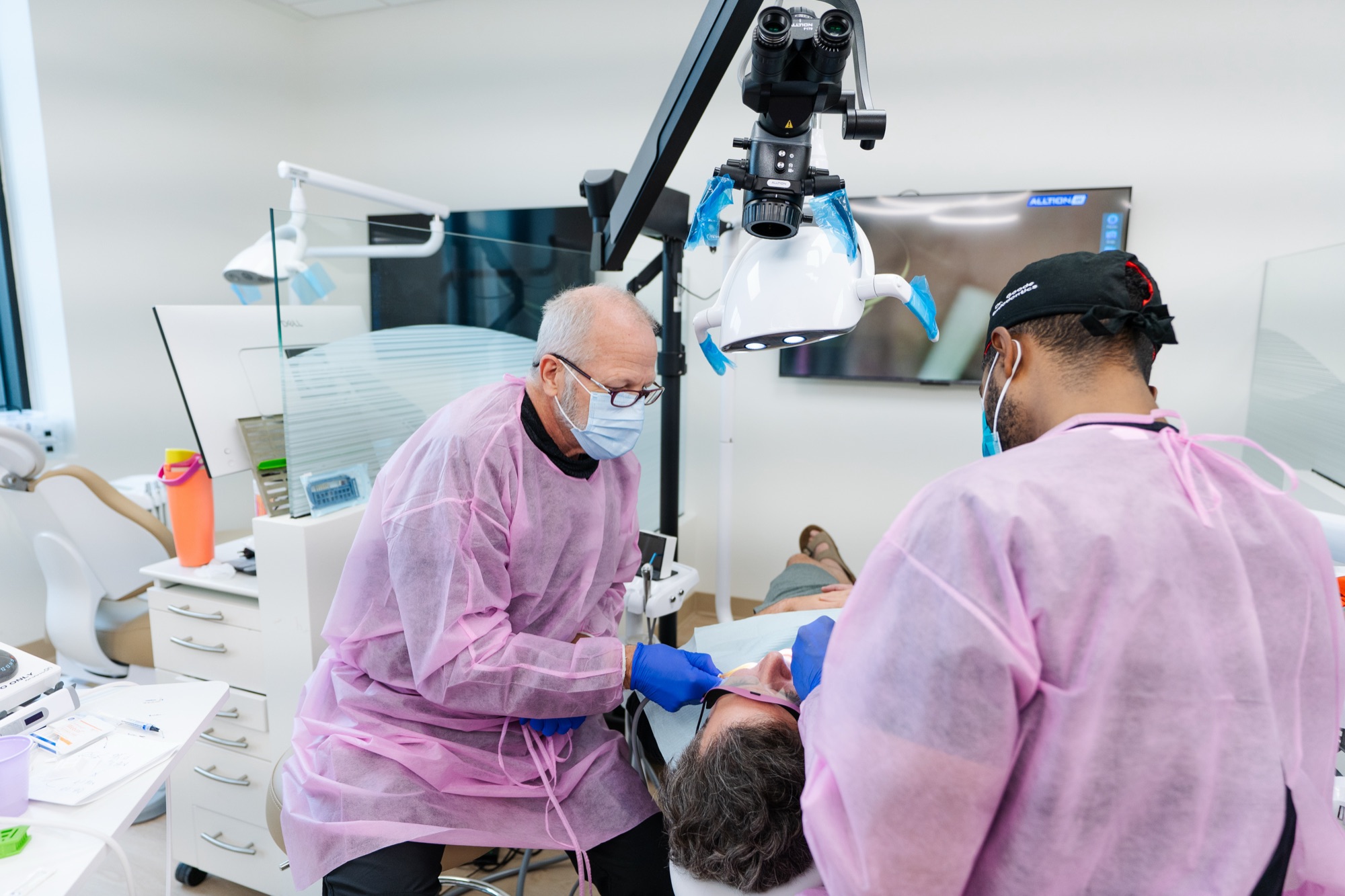
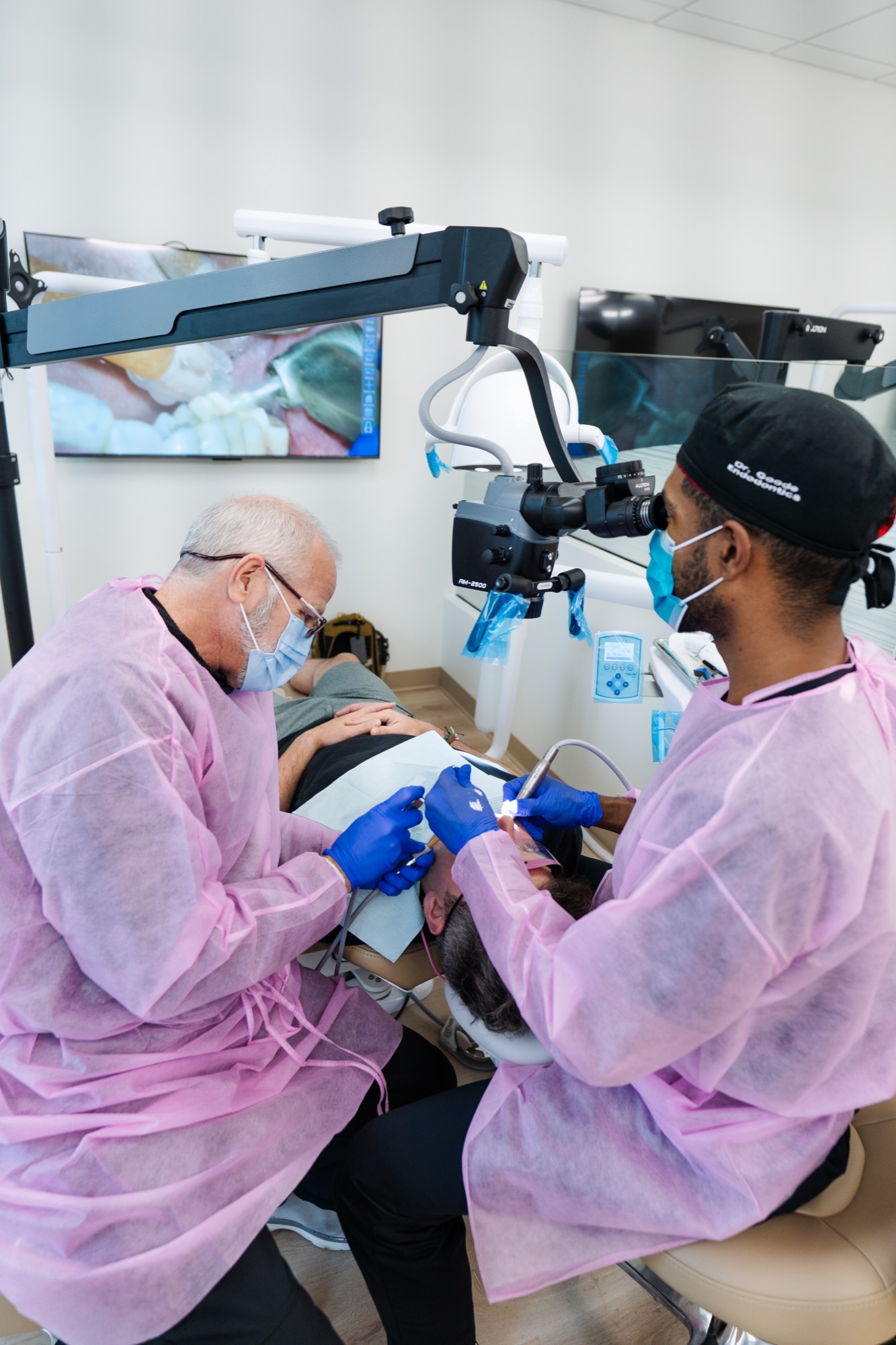
Every endodontic procedure at AIDM® is planned with 3D CBCT imaging and performed under a dental operating microscope.
Clinically reviewed by Dr. Steven J. Katz, DDS, MS, Endodontics Program Director · Last reviewed November 25, 2026
Root Canal Therapy at AIDM®
Relief doesn’t always require removing the tooth.
When infection reaches the soft tissue inside a tooth—known as the pulp—a filling alone may no longer solve the problem.
Root canal therapy treats the infection from inside the tooth while preserving as much of your natural tooth as possible.
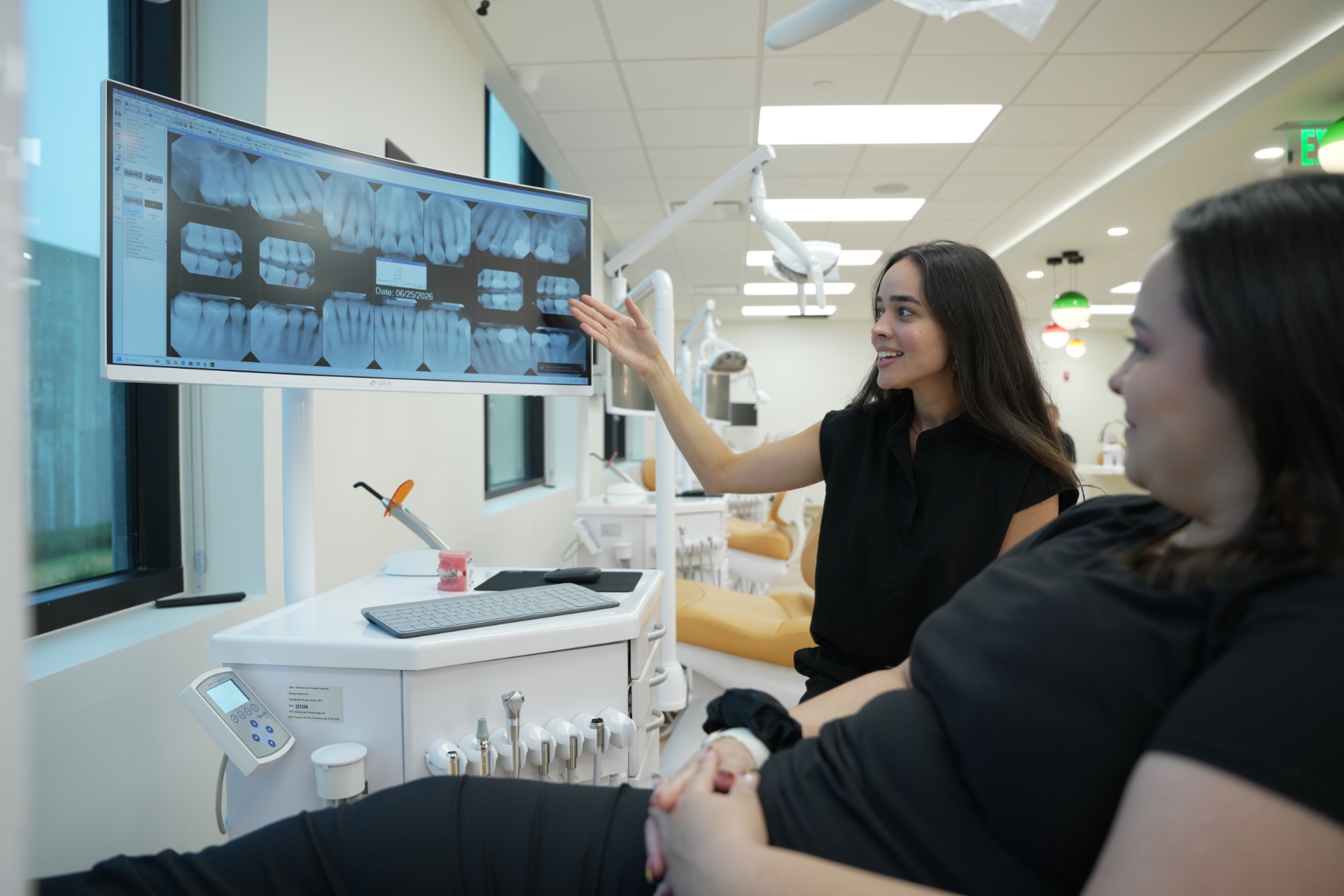
At AIDM®, treatment begins by identifying the source of your symptoms with a clinical examination and appropriate digital imaging.
The infected or inflamed tissue is then removed, the root canal system is carefully cleaned and sealed, and the tooth is restored to help protect it for continued function.
Many root canal treatments can be completed in a single visit, depending on the complexity of the case.
Who It’s For
Could you need a root canal?
Tooth pain doesn’t automatically mean you need root canal therapy.
But certain symptoms can indicate that the pulp inside a tooth has become inflamed or infected.
Persistent Tooth Pain
Pain that continues, returns repeatedly or interferes with your normal routine should be evaluated.

Lingering Sensitivity
Sensitivity to hot or cold that continues after the temperature stimulus is removed may indicate a problem inside the tooth.
Pain When Biting
Pain or tenderness when chewing or applying pressure can occur when the tissues around a tooth are inflamed.

Swollen or Tender Gums
Swelling around a specific tooth may be associated with infection and should be assessed promptly.
Darkened Tooth
A tooth that becomes noticeably darker following trauma or other damage may require evaluation of the pulp.

Bump on the Gum
A pimple-like bump near a tooth can sometimes indicate drainage associated with an infection.
Benefits
Why save your natural tooth?
Root canal therapy treats the problem—not just the pain.
01
Remove Infection
Treatment removes infected or inflamed tissue from inside the tooth and cleans the root canal system.
02
Relieve Tooth Pain
By addressing the source of inflammation or infection, root canal treatment is designed to relieve the symptoms associated with the affected tooth.
03
Preserve Your Natural Tooth
Saving a restorable natural tooth can help avoid extraction and the need to replace a missing tooth.
04
Restore Comfortable Function
After appropriate treatment and restoration, the tooth can continue contributing to normal biting and chewing.
05
Protect Long-Term Oral Health
Treating infection promptly can help prevent the problem from progressing into surrounding tissues.
Benefits & Limitations
The goal is to save the tooth—but every tooth needs to be evaluated individually.
Root canal therapy can preserve many infected or damaged teeth, but treatment depends on whether enough healthy tooth structure remains and whether the tooth can be predictably restored.
Root canal therapy cannot:
- Repair a tooth that is structurally non-restorable
- Guarantee that every infected tooth can be saved
- Replace the need for a crown or restoration when one is necessary
- Correct severe periodontal or supporting-bone problems
- Eliminate the possibility that future retreatment could become necessary
Root canal therapy can:
- Remove infected or inflamed pulp tissue
- Preserve many natural teeth
- Relieve symptoms caused by infection
- Prevent the need for extraction in appropriate cases
- Prepare the tooth for a protective final restoration
If the tooth cannot be predictably preserved, we’ll explain the appropriate alternatives before treatment.
The process
Six steps from diagnosis to a protected tooth.
01
Schedule your evaluation
Tell us about your symptoms, when they began and anything that makes the pain better or worse. If you’re experiencing significant pain or swelling, ask about same-day emergency availability.
02
Diagnose the problem
We examine the tooth and surrounding tissues and use appropriate digital imaging to determine what’s causing your symptoms. The goal is to confirm whether the tooth actually requires root canal treatment before proceeding.
03
Keep you comfortable
The treatment area is thoroughly numbed with local anesthesia. If dental anxiety or treatment complexity requires additional support, appropriate sedation options can also be discussed.
04
Clean the root canals
An opening is created in the tooth so the infected or inflamed pulp tissue can be removed. The internal canal system is carefully cleaned, shaped and disinfected.
05
Seal the tooth
Once the canals have been cleaned, they are filled and sealed to help prevent bacteria from re-entering the space. Many standard cases can be completed during a single treatment visit.
06
Restore & protect your tooth
Following root canal treatment, the tooth may require a filling, crown or other restoration depending on how much tooth structure remains. This final restoration helps protect the treated tooth and restore comfortable function.
Pricing
Clear pricing before treatment begins.
Root canal treatment varies in complexity depending on the tooth, anatomy and whether previous endodontic treatment has been performed.

Advanced Root Canal Therapy
Starting at $995*
Root canal therapy designed to remove infection and preserve your natural tooth whenever clinically appropriate.
What’s included:
- Clinical evaluation of the affected tooth
- Appropriate diagnostic imaging
- Local anesthesia
- Root canal cleaning and disinfection
- Root canal filling and sealing
- Post-treatment instructions
Advertised price of $995 applies to standard root canal therapy. Complex cases, including highly calcified canals or retreatments, may require an adjusted fee. Final fees will be presented before treatment begins.

Final Tooth Restoration
Personalized Pricing
A root canal treats the inside of your tooth, but many treated teeth also need a final restoration for long-term protection.
Restoration options may include:
- Tooth-colored filling
- Core buildup
- Dental crown
- Another clinically appropriate restoration
Your care team will explain whether additional restorative treatment is recommended and provide the associated costs.
Insurance & Financing
Understand your treatment costs before you begin.
Root canal therapy is performed to treat dental disease rather than solely for cosmetic purposes, so many dental insurance plans may provide benefits.
Actual coverage varies by plan.
Dental Insurance
Our team can help review applicable benefits and provide an estimate of your expected out-of-pocket costs.
AIDM® Membership
Patients without traditional dental insurance can ask about AIDM®’s membership plan and applicable treatment discounts.
Financing
Financing options may be available for qualifying dental treatment.


Emergency Root Canal Care
Tooth pain shouldn’t have to wait.
Dental infections can progress, and severe or persistent tooth pain should be evaluated promptly.
AIDM® offers same-day emergency evaluations when availability allows, particularly for patients experiencing significant pain or swelling.
Contact us promptly if you’re experiencing:
- Severe or persistent tooth pain
- Increasing swelling
- Significant pain when biting
- Lingering temperature sensitivity
- A pimple-like bump near the tooth
- Symptoms that are rapidly getting worse
An emergency evaluation doesn’t automatically mean you’ll need a root canal.
Our first priority is identifying the cause of your symptoms and determining the appropriate treatment.
Root Canal Therapy at AIDM®
Advanced endodontic care focused on preserving natural teeth.
Root canal treatment can range from straightforward to highly complex. Some teeth have narrow or calcified canals, unusual anatomy, previous treatment or other factors that make diagnosis and treatment more challenging.
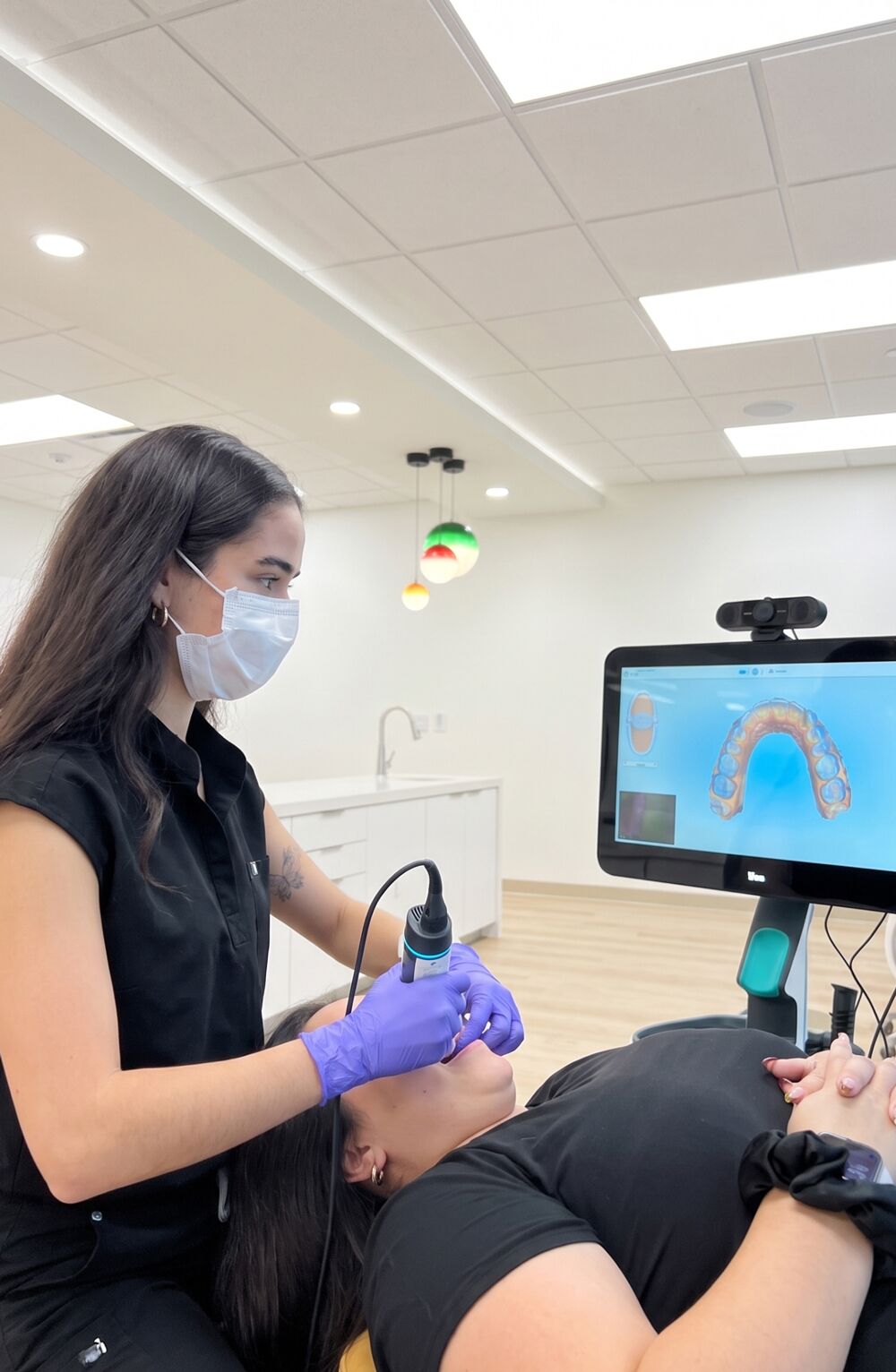
AIDM® combines advanced imaging, modern endodontic technology and clinical expertise to evaluate and manage root canal cases appropriately.
A different standard of dental medicine
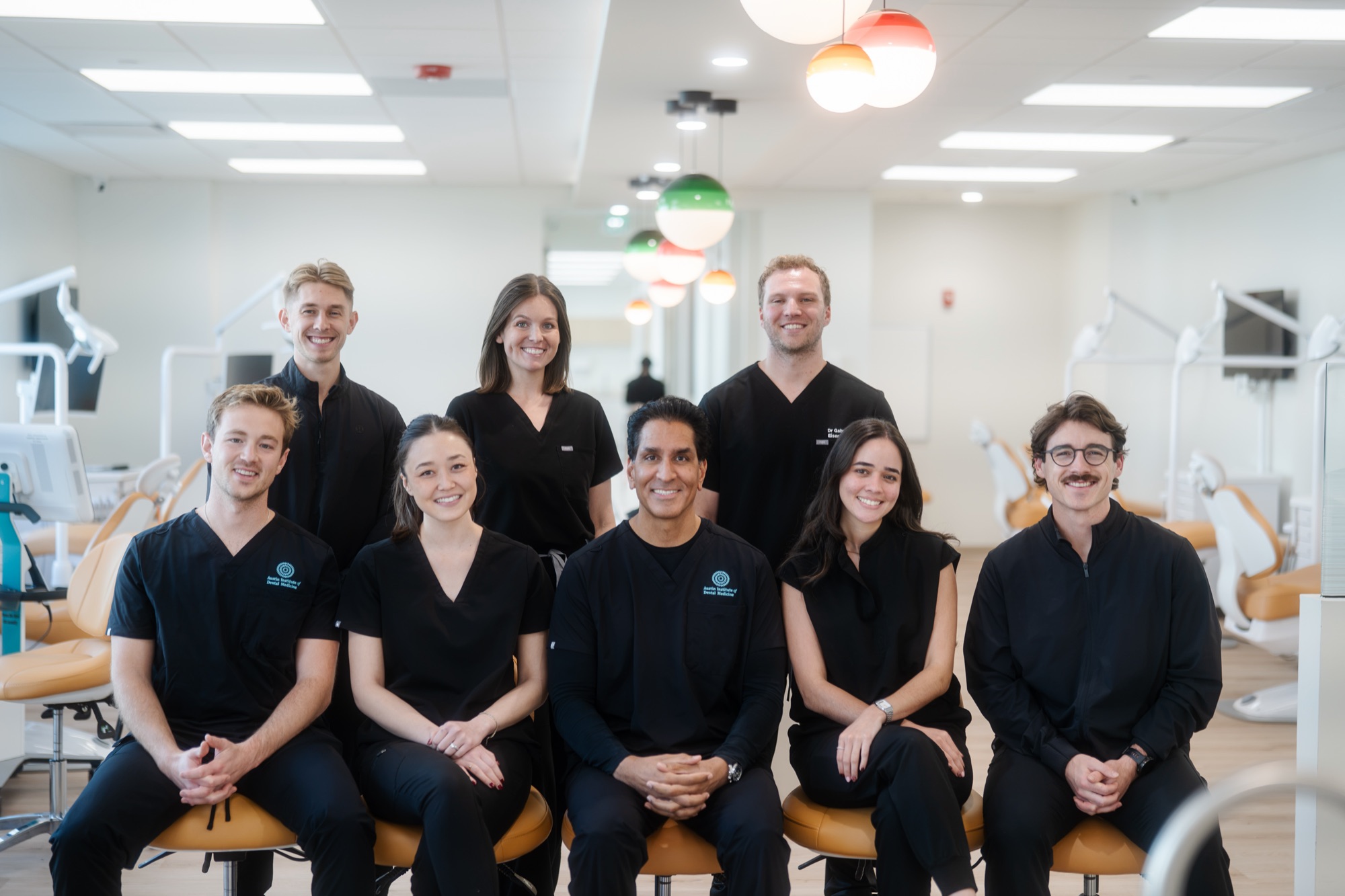
Featuring our clinical faculty
Faculty Spotlight
Steven J. Katz, DDS, MS
Master Clinician, Endodontics
Dr. Steven J. Katz is a board-certified endodontist and Diplomate of the American Board of Endodontics with more than 35 years of clinical experience.
He has also served in national endodontic leadership, including as President of the American Association of Endodontists for the 2025–2026 term.
At AIDM®, Dr. Katz contributes extensive experience in tooth preservation, complex endodontic diagnosis and root canal treatment while also serving as a clinical educator and mentor.
Why AIDM®
Root canal care inside a full dental institute.
Treating the infection is one part of saving a tooth.
Diagnosis, endodontic treatment and the final restoration all need to work together.
Endodontic Expertise
AIDM® combines endodontic-focused clinical expertise with advanced training for both routine and complex root canal treatment.
Advanced Technology
Digital imaging and modern endodontic technology support diagnosis, treatment planning and management of more complex anatomy.
Connected Restorative Care
After root canal treatment, your final filling, crown or other restorative needs can be coordinated within AIDM®.
After Your Root Canal
What should you expect after treatment?
Some tenderness around the treated tooth can occur after root canal therapy and generally improves as the surrounding tissues recover.
Your exact instructions will depend on your treatment.
Follow Your Instructions
Take medications and follow the post-treatment guidance provided by your clinical team.
Be Careful With the Tooth
Until your final restoration is completed, avoid placing unnecessary stress on the treated tooth.
Keep the Area Clean
Continue brushing and flossing as directed while being mindful of temporary restorations or tender areas.
Complete Your Restoration
If a crown or other final restoration is recommended, don’t delay this stage of treatment. The restoration helps protect the tooth from fracture and restores normal function.
Contact Us With Concerns
Let AIDM® know if symptoms are worsening rather than improving or if you experience anything outside the recovery expectations explained by your clinical team.
“This was my first visit, and I had an amazing experience! Everyone was incredibly thorough during my consultation and took the time to explain all of the treatment options available for my situation. Dr. Bruneman was wonderful, and I…”
“Super grateful for my smooth experience at The Austin Institute of Dental Medicine. Shout out to the wonderful Dr. Qadi for her amazing work, attention to detail and professionalism. Her assist Tammy did a great job of ensuring my comfort…”
“Exceptional Care, Compassion, and Professionalism! I cannot express enough gratitude for the exceptional care my father received at Austin Institute of Dental Medicine. From the very first phone call to schedule an urgent appointment…”
“My main dentist was amazing and there were multiple professionals checking everything and making sure I got what I needed, everything was very clear, on pricing and communication. Great dental office, every staff member was very nice. I…”
“I was nervous an excited to go at the same time because I've been wanting my teeth fixed but I did not know what to expect. From the reception desk to Dr Dylan c McMahan both made me feel very welcoming and did a great job with my x-rays…”
“Dra. Guerrero and Tamy were awesome! Will definitely be back”
“I had such an amazing experience getting all four of my wisdom teeth extracted!! Stephanie Guerrero was amazing and made sure I was taken care of the entire way through, while answering all my questions, since it was my first time going…”
“Thank you very much to everyone, beautiful staff, excellent experience, and a giant thank you to Tammy, I didn't know I needed you until you showed up.”
“So nice, friendly and well educated versus other orthodontists that my daughter has been too. Thank you for seeing what others didn't. Would recommend this place to anyone in the Austin area.”
“I had a great experience with Dr. Nick Perron at AIDM! I got my braces here, and I couldn’t be happier with the care I received. Dr. Perron is very professional, knowledgeable, and genuinely cares about his patients. He always made sure I…”
“Dr.kalamchi,Dr.elhassan,Dr.apolonio, all did a wonderful job fixing my root canal and cleaning my teeth, took there time to make sure everything was done to perfection I greatly appreciated that”
“Dr. Yoo and his assistant Tammy were absolutely amazing. They walked me through the process of everything very well and were also incredibly professional.”
Save or Remove?
Root canal therapy or extraction?
If a natural tooth can be predictably saved and restored, root canal therapy may allow you to keep it. Extraction may be more appropriate when a tooth cannot be predictably restored.
| Root canal therapy | Extraction | |
|---|---|---|
| When it may be appropriate | The tooth is restorable and the infection or inflammation is inside the pulp | The tooth cannot be predictably restored |
| What it does | Removes infected or inflamed pulp tissue, relieves symptoms and preserves the natural tooth | Removes the tooth |
| Afterwards | A protective final restoration, often a crown, when one is necessary | Replacing the missing tooth may be needed (implant, bridge or denture) |
| AIDM® fee | Standard root canal therapy from $995 (complex cases and retreatments may cost more) | Quoted after clinical evaluation |
This comparison provides general information and is not a treatment recommendation. Suitability, timeline and outcome depend on individual clinical factors. Final treatment and fees are confirmed after clinical evaluation.
Common Questions About Root Canal Therapy At AIDM®
Does a root canal hurt?
Root canal therapy is performed to treat the source of tooth pain.
The area is thoroughly numbed with local anesthesia before treatment. Sedation options may also be available for patients who need additional help relaxing.
Some temporary tenderness afterward is possible as the surrounding tissues recover.
How do I know if I actually need a root canal?
Symptoms alone can’t confirm the diagnosis.
Persistent pain, lingering sensitivity, swelling or discomfort when biting may indicate a problem with the pulp, but an examination and appropriate imaging are needed to determine the cause.
Can a root canal save my tooth?
Often, yes.
Root canal therapy is specifically designed to preserve a natural tooth when the pulp has become inflamed or infected.
Whether a particular tooth can be saved depends on its remaining structure, supporting tissues, anatomy and overall condition.
How long does a root canal take?
Treatment time depends on the tooth and complexity of its root canal anatomy.
Many standard cases can be completed during a single visit, while more complex treatment may require additional time or appointments.
Will I need a crown after my root canal?
Many root-canal-treated teeth—particularly back teeth—benefit from a crown or another protective restoration.
Your dentist will recommend the appropriate final restoration based on the tooth’s location and how much healthy structure remains.
Is it better to have a root canal or pull the tooth?
If a natural tooth can be predictably saved and restored, root canal therapy may allow you to retain it rather than removing it.
However, extraction may be more appropriate when a tooth cannot be predictably restored.
Your evaluation will help determine which option is appropriate for your situation.
What happens if I don’t treat an infected tooth?
An untreated infection can continue to progress and may affect the tissues surrounding the tooth.
Persistent pain, swelling or signs of infection should therefore be evaluated rather than simply monitored at home.
What is root canal retreatment?
Occasionally, a previously treated tooth may develop persistent or recurrent disease.
Retreatment involves reopening the tooth, removing the previous root canal materials when appropriate, cleaning the canal system again and resealing it.
Retreatment is typically more complex than an initial root canal, which can affect treatment planning and cost.
How much does root canal therapy cost at AIDM®?
Standard Advanced Root Canal Therapy currently starts at $995.
Complex anatomy, highly calcified canals, retreatment and other factors may increase the final fee. You’ll receive your final treatment cost before treatment begins.
Does insurance cover root canal treatment?
Many dental plans provide some coverage for endodontic treatment, but benefits, deductibles and patient responsibility vary.
AIDM® can help review your applicable benefits before treatment.
Do I need a dental restoration after a root canal?
In most cases, yes. After a root canal, the tooth is more vulnerable to fracture. A dental crown or restorative treatment helps protect the tooth, restore strength, and maintain proper function. We will guide you to the appropriate crown or restorative dentistry solution for long-term success.
What do I do to manage toothache pain until I can see a dentist?
Rinse gently with warm salt water and avoid chewing on the painful side of your mouth. Over-the-counter pain relievers can help control discomfort, and a cold compress may reduce swelling. Avoid heat or putting off care—ongoing pain should be evaluated promptly at the Austin Institute of Dental Medicine.

Take the next steps
Tooth pain? Find out what’s causing it.
Persistent tooth pain doesn’t automatically mean you’ll lose your tooth—or even that you need a root canal.
Start with an evaluation.
We’ll identify the source of your symptoms, explain whether root canal therapy is appropriate and review your treatment, comfort options and expected costs before you proceed.