
DENTURES IN AUSTIN, TX
Replace missing teeth.
Feel like yourself again.
Custom dentures can restore a complete-looking smile while helping you eat, speak and go through everyday life with greater confidence.
At AIDM®, your denture is planned around your mouth, bite and individual needs—not simply the space left by missing teeth.
Clinically reviewed by Dr. Edgar P. O’Neill, DDS, MS, FACP, Prosthodontics Program Director · Last reviewed November 25, 2026
Dentures at AIDM®
A new smile should be designed around you.
Losing several or all of your teeth can change more than your appearance. It can affect what you eat, how you speak and how comfortable you feel in everyday situations.
Modern dentures provide several ways to replace missing teeth—from partial dentures that work alongside remaining natural teeth to complete dentures and implant-supported options.
At Austin Institute of Dental Medicine, we begin by evaluating your remaining teeth, gums, supporting structures and bite before recommending a solution.
The goal is a denture that looks natural, functions comfortably and fits the way you live.


Benefits
What can dentures restore?
01
A Complete Smile
Replace multiple missing teeth or an entire arch with a restoration designed around your appearance.
02
Improved Chewing
Replacement teeth provide a broader chewing surface and can make many everyday foods easier to manage.
03
Speech Support
Replacing missing teeth may help improve pronunciation of certain sounds after you adjust to the appliance.
04
Facial Support
Complete dentures can provide support for the lips and cheeks where teeth have been lost.
05
Personalized Appearance
Tooth shape, shade, arrangement and denture contours can be selected to complement your face and smile.
Who It’s For
Could dentures be right for you?
A denture evaluation can help when tooth loss affects several areas of your smile.

Multiple Missing Teeth
A partial denture may replace several missing teeth while allowing appropriate healthy teeth to remain.
Complete Tooth Loss
Complete dentures can replace all teeth in the upper arch, lower arch or both.
Severely Damaged Teeth
When multiple remaining teeth cannot be predictably restored, dentures may become part of the replacement plan.
Older Dentures
A denture that moves, causes sore spots or no longer feels comfortable should be professionally evaluated.
Difficulty Eating or Speaking
Extensive tooth loss or an unstable denture can interfere with everyday function.
Looking for More Stability
If you’re relying heavily on adhesive or struggling with movement, implant-supported options may be worth exploring.
Denture Options
Find the right level of replacement and support.
There isn’t one type of denture that’s right for everyone.
The appropriate design depends on how many teeth you’re missing, the condition of your remaining teeth and gums, your anatomy, treatment preferences and budget.

Replace an entire arch of missing teeth.
Complete Dentures
A complete denture replaces all teeth in the upper or lower arch.
The appliance rests on the gums and is shaped around the underlying tissues to restore a complete smile.
Complete dentures may be appropriate when:
- All teeth in an arch are already missing
- Remaining teeth cannot be predictably maintained
- A removable, non-implant option is preferred
- A patient needs to replace an older complete denture
Your denture is personalized for tooth shape, shade, arrangement and gum contours.

Replace missing teeth while keeping healthy teeth.
Partial Dentures
A partial denture fills spaces created by several missing teeth while allowing appropriate natural teeth to remain.
The replacement teeth are connected to a gum-colored base and may use clasps or other attachments for support.
Before designing your partial denture, we evaluate the health of the teeth and tissues that will support it.
Avoid going without teeth during initial healing.
Immediate Dentures
An immediate denture is prepared before planned tooth extractions and placed shortly after the teeth are removed.
This provides replacement teeth during the initial healing period.
Because your gums and supporting tissues change after extractions, an immediate denture commonly requires adjustments and may later require relining or replacement.
We’ll explain the expected transition before treatment begins.
Add greater stability with dental implants.
Implant-Supported Dentures
Dental implants can be used to provide additional support for a removable or fixed full-arch restoration.
Compared with conventional dentures, implant-supported options can provide greater retention and improved chewing stability.
Implant treatment requires additional evaluation of:
- Bone availability
- Gum health
- Medical history
- Implant position
- Surgical needs
- Restorative design
Some patients may also require preparatory treatment before implant placement.
Traditional or Implant-Supported?
Compare your options before you decide.
Both approaches can replace missing teeth—but they work differently.
Traditional Dentures
May offer:
- Non-surgical tooth replacement
- Lower initial treatment complexity
- Removable design
- Replacement of an entire arch
- Personalized tooth and gum appearance
Considerations:
- Rest on the gums
- May move during some activities
- Require an adjustment period
- Fit can change as oral tissues change
- Periodic adjustment or relining may be necessary
Implant-Supported Dentures
May offer:
- Greater retention
- Improved stability during chewing
- Less movement of the restoration
- Removable or fixed designs depending on the treatment plan
Considerations:
- Requires implant surgery
- Requires adequate bone or appropriate preparatory treatment
- Longer treatment process
- Higher overall treatment investment
- Not appropriate for every patient
We’ll help you compare both approaches based on your priorities—not simply choose the most complex option.
01
Schedule your consultation
Tell us about your missing teeth, current denture and what you would most like to improve.
02
Evaluate your mouth
We examine your remaining teeth, gums, bite and oral tissues and use appropriate imaging when necessary.
03
Choose the right approach
We’ll explain which teeth can be preserved and whether a partial, complete, immediate or implant-supported denture is appropriate.
04
Capture detailed records
Digital scans or impressions record the shape of your mouth. We also evaluate your bite and discuss tooth shape, shade and appearance.
05
Try & deliver your denture
When appropriate, a try-in allows us to evaluate tooth arrangement, appearance and bite before the final denture is completed. At delivery, we’ll check fit and show you how to use and care for your new appliance.
06
Adjust & maintain
Your mouth needs time to adapt. Follow-up appointments allow us to address pressure areas, make appropriate adjustments and monitor how the denture is functioning.
Preparing Your Smile
Sometimes the foundation needs attention first.
Some patients can move directly into denture treatment.
Others need additional care before the final appliance can be made. That may include:
Treating Gum Disease
Healthy oral tissues provide a better foundation for your denture.
Preserving Healthy Teeth
With partial dentures, remaining teeth may need restorative treatment before they support the new appliance.
Tooth Extractions
Teeth that cannot be predictably maintained may need to be removed before complete or immediate dentures are placed.
Bone or Implant Treatment
Patients considering implant-supported dentures may require additional surgical evaluation or preparatory care.
At AIDM®, these different stages can be coordinated within the same institute.
Pricing
Denture treatment personalized to your needs.
The cost of dentures depends on the type of appliance, materials selected and whether additional treatment is needed before your final denture can be completed.
Denture Consultation
Personalized Treatment Plan
Your evaluation may include, when clinically appropriate:
- Examination of remaining teeth
- Gum and oral tissue assessment
- Bite evaluation
- Evaluation of an existing denture
- Appropriate digital imaging
- Comparison of denture options
- Implant discussion when appropriate
- Personalized treatment recommendations
- Review of expected costs
Custom Denture Treatment
Personalized Pricing
Your final cost depends on factors including:
- Partial vs. complete denture
- Immediate denture needs
- Materials and design
- Tooth extractions
- Treatment of remaining teeth
- Periodontal care
- Adjustments or relines
- Dental implants
- Surgical or grafting procedures
You’ll receive a personalized treatment and cost plan before proceeding.
Insurance & Financing
Understand your options before treatment begins.
Dental insurance may provide benefits toward dentures and related treatment depending on your plan.
Dental Insurance
Our team can help review applicable benefits and estimate your expected patient responsibility.
Financing Options
Financing may be available for qualifying denture and implant treatment.
Phased Treatment
When extractions, healing or implant treatment are involved, care may be completed in planned stages.
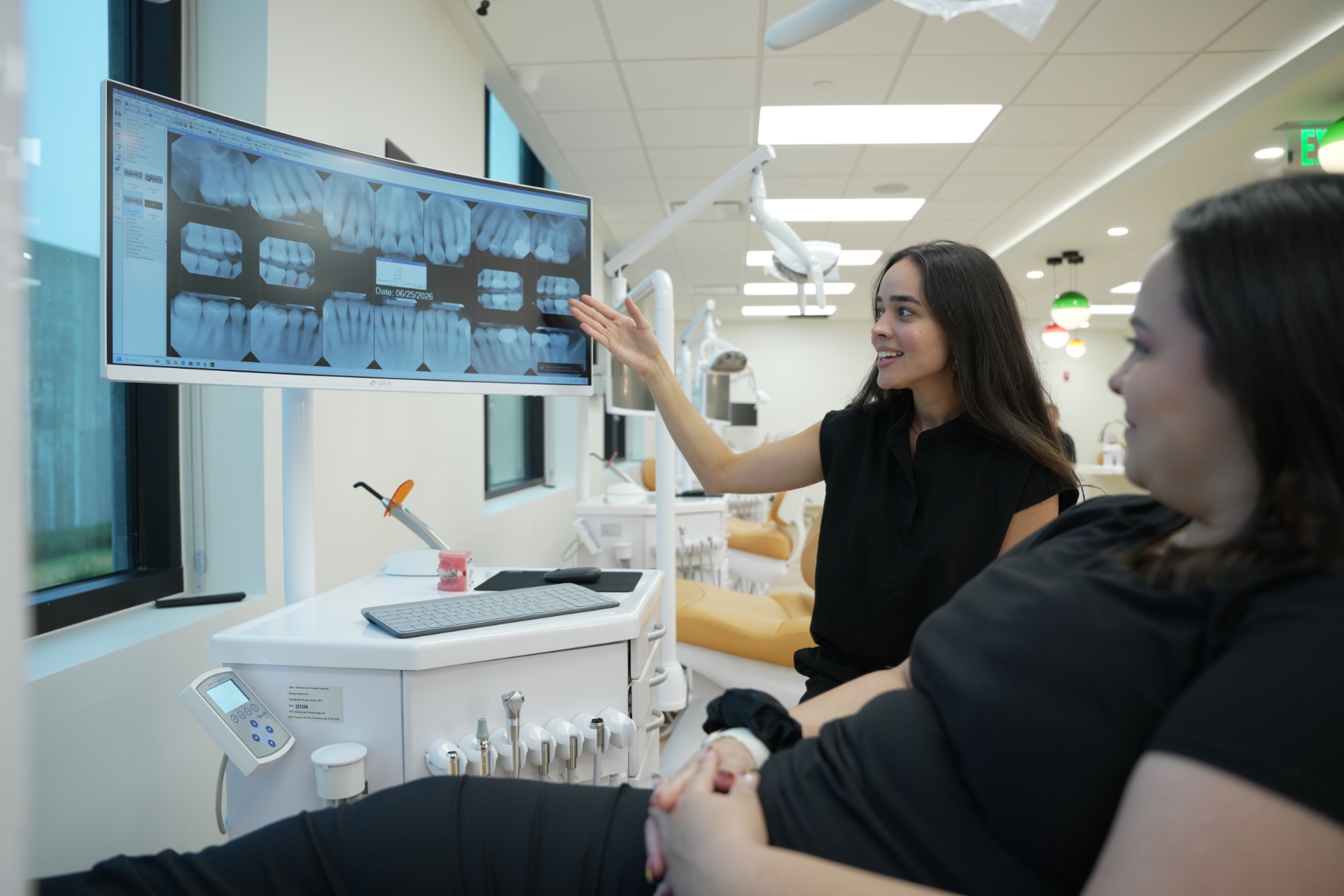
Dentures at AIDM®
More than making an appliance.
Successful denture treatment starts with understanding the foundation underneath it.
Remaining teeth may need treatment. Gum health may need attention. Extractions may need to be coordinated. And if you’re considering implant support, surgical and restorative planning need to work together.
At AIDM®, these different areas of care can be coordinated within one dental institute so your denture is planned as part of your overall oral health—not as an isolated appliance.
A different standard of dental medicine
Featuring our clinical faculty
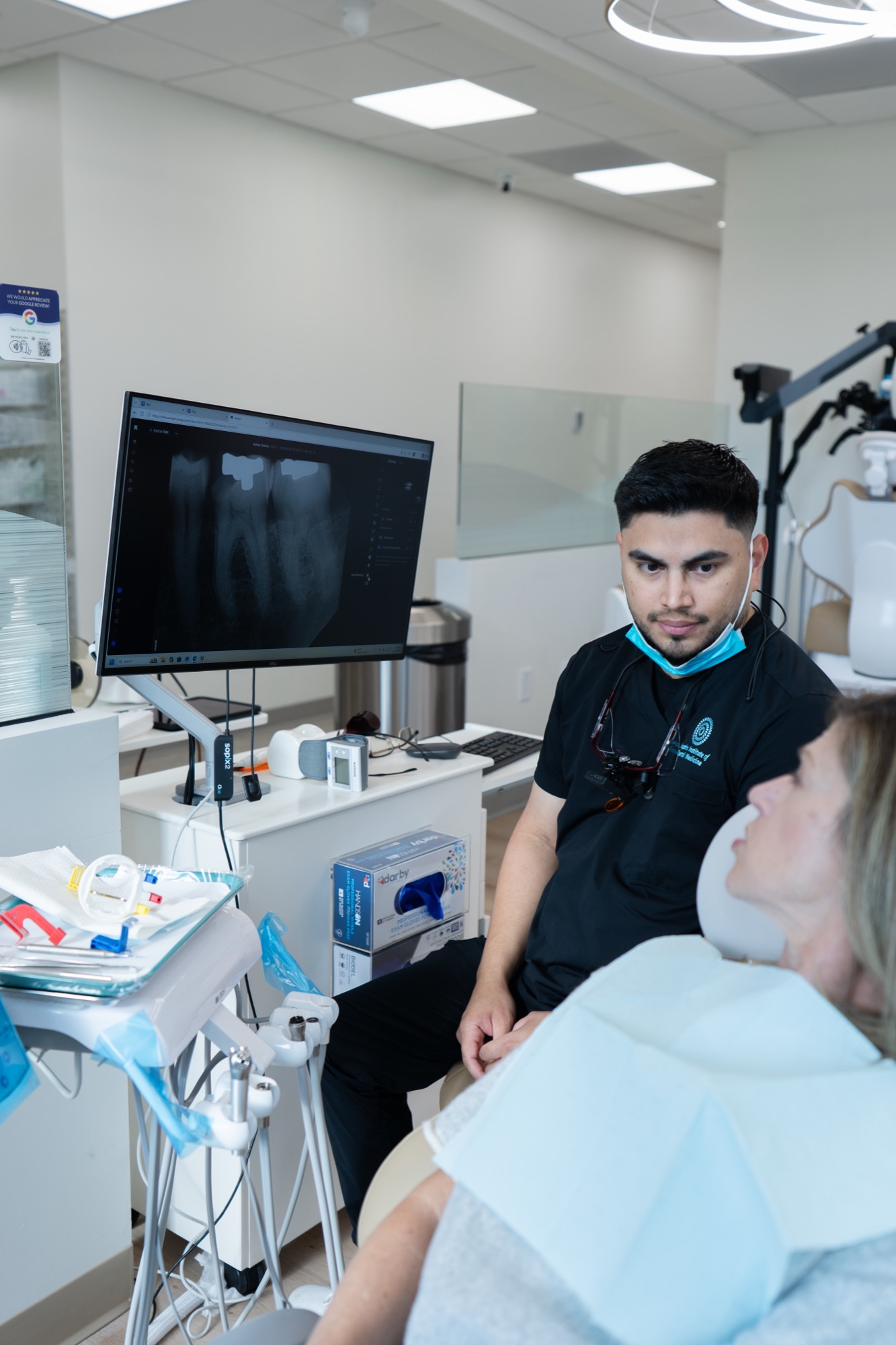
Why AIDM®
Denture care inside a full dental institute.
Whole-Smile Planning
We evaluate your remaining teeth, gums, supporting tissues and bite before designing your denture.
Personalized Design
Tooth shape, shade, arrangement and denture contours are selected around your mouth and appearance.
Connected Care
If you need extractions, restorative treatment, periodontal care or dental implants, appropriate treatment can be coordinated within AIDM®.
Living With New Dentures
Give yourself time to adjust.
A new denture will feel different at first.
Your tongue, cheeks and facial muscles need time to adapt, and chewing or speaking may require some practice.
Start With Easier Foods
Begin with softer foods and smaller bites. As you become more comfortable, gradually introduce a wider variety of foods.
Chew on Both Sides
Using both sides can help keep a removable denture more balanced while eating.
Practice Speaking
Reading aloud or practicing difficult words can help your tongue adapt to the new appliance.
Expect Some Adjustment
Small pressure areas may develop as you begin wearing your denture. Persistent soreness should be evaluated rather than simply tolerated.
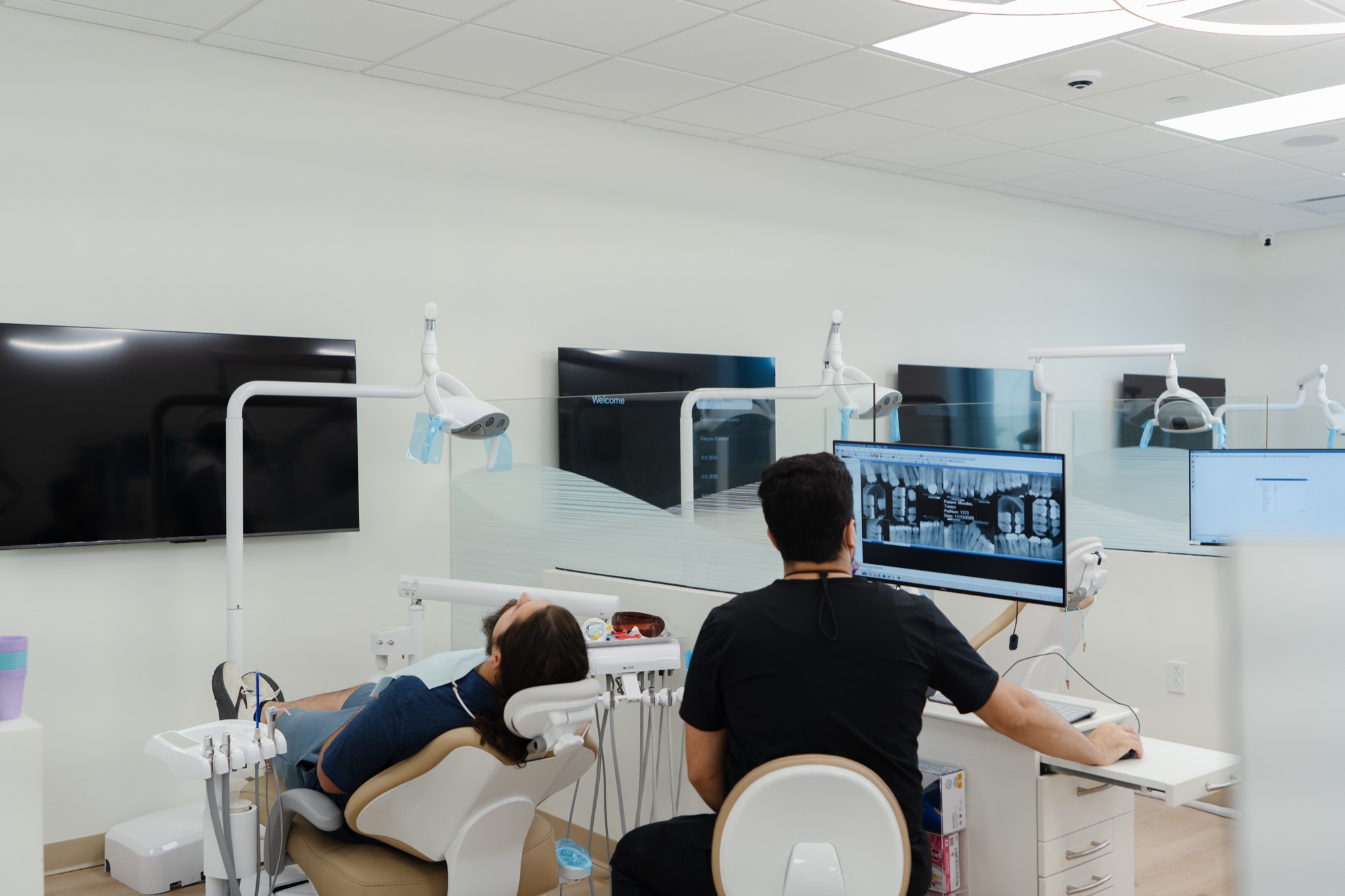
Caring for Your Dentures
Protect your appliance—and the tissues underneath it.
Dentures still require daily care.
Clean Them Daily
Use a soft denture brush and an appropriate nonabrasive cleanser to remove food and plaque.
Avoid Hot Water
Hot or boiling water may distort denture materials.
Remove Them as Directed
Many removable denture patients are advised to remove their appliance at night, although instructions can vary following extractions or for specific restorations.
Clean Your Mouth Too
Even without natural teeth, your gums, tongue and other oral tissues still need regular hygiene.
Keep Your Checkups
Your mouth changes over time. Routine examinations allow us to monitor oral tissues and evaluate whether your denture still fits and functions appropriately.
When an Old Denture Stops Fitting
You don’t necessarily need to live with a loose denture.
Changes in your gums and supporting structures can alter how a denture fits over time.
Contact AIDM® if your denture:
- Moves when you eat or speak
- Creates recurring sore spots
- Suddenly feels different
- Requires increasing amounts of adhesive
- Appears significantly worn
- Has cracked or broken
- No longer allows you to chew comfortably
Depending on the problem, your denture may need an:
Adjustment
Changes a specific area that is rubbing or interfering with comfort or bite.
Reline
Resurfaces the inside of the denture to improve its relationship with your gums.
Replacement
May be appropriate when the appliance is significantly worn, damaged, unstable or no longer meets your needs.
“This was my first visit, and I had an amazing experience! Everyone was incredibly thorough during my consultation and took the time to explain all of the treatment options available for my situation. Dr. Bruneman was wonderful, and I…”
“Super grateful for my smooth experience at The Austin Institute of Dental Medicine. Shout out to the wonderful Dr. Qadi for her amazing work, attention to detail and professionalism. Her assist Tammy did a great job of ensuring my comfort…”
“Exceptional Care, Compassion, and Professionalism! I cannot express enough gratitude for the exceptional care my father received at Austin Institute of Dental Medicine. From the very first phone call to schedule an urgent appointment…”
“My main dentist was amazing and there were multiple professionals checking everything and making sure I got what I needed, everything was very clear, on pricing and communication. Great dental office, every staff member was very nice. I…”
“I was nervous an excited to go at the same time because I've been wanting my teeth fixed but I did not know what to expect. From the reception desk to Dr Dylan c McMahan both made me feel very welcoming and did a great job with my x-rays…”
“Dra. Guerrero and Tamy were awesome! Will definitely be back”
“I had such an amazing experience getting all four of my wisdom teeth extracted!! Stephanie Guerrero was amazing and made sure I was taken care of the entire way through, while answering all my questions, since it was my first time going…”
“Thank you very much to everyone, beautiful staff, excellent experience, and a giant thank you to Tammy, I didn't know I needed you until you showed up.”
“So nice, friendly and well educated versus other orthodontists that my daughter has been too. Thank you for seeing what others didn't. Would recommend this place to anyone in the Austin area.”
“I had a great experience with Dr. Nick Perron at AIDM! I got my braces here, and I couldn’t be happier with the care I received. Dr. Perron is very professional, knowledgeable, and genuinely cares about his patients. He always made sure I…”
“Dr.kalamchi,Dr.elhassan,Dr.apolonio, all did a wonderful job fixing my root canal and cleaning my teeth, took there time to make sure everything was done to perfection I greatly appreciated that”
“Dr. Yoo and his assistant Tammy were absolutely amazing. They walked me through the process of everything very well and were also incredibly professional.”
Compare Your Options
Denture options at a glance
There isn’t one type of denture that’s right for everyone. The appropriate design depends on how many teeth you’re missing, the condition of your remaining teeth and gums, your anatomy, treatment preferences and budget.
| Complete dentures | Partial dentures | Immediate dentures | Implant-supported dentures | |
|---|---|---|---|---|
| What it replaces | All teeth in the upper or lower arch | Several missing teeth, while appropriate natural teeth remain | Teeth removed in planned extractions; placed shortly after | An arch of teeth, supported by dental implants |
| How it stays in place | Rests on the gums | Gum-colored base with clasps or other attachments | Rests on the gums during initial healing | Attaches to dental implants (removable or fixed designs) |
| May offer | Non-surgical replacement of an entire arch | Replaces missing teeth while keeping healthy teeth | Avoid going without teeth during initial healing | Greater retention and improved chewing stability |
| Considerations | May move during some activities; fit can change as tissues change; periodic adjustment or relining | Supporting teeth and tissues are evaluated first | Commonly requires adjustments and may later need relining or replacement | Requires implant surgery and adequate bone; longer treatment process; higher overall investment |
| AIDM® fee | Quoted after clinical evaluation | Quoted after clinical evaluation | Quoted after clinical evaluation | Snap-in implant-supported denture: $9,500–$17,000 per arch |
This comparison provides general information and is not a treatment recommendation. Suitability, timeline and outcome depend on individual clinical factors. Final treatment and fees are confirmed after clinical evaluation.
Common questions about dentures at AIDM®
Will my dentures look natural?
Modern dentures can be personalized for tooth shape, shade and arrangement as well as the contours of the gum-colored base.
The goal is to create a complete smile that complements your individual appearance rather than looking overly uniform.
How long does it take to get used to dentures?
Adjustment varies from person to person.
Speaking and chewing may feel unfamiliar initially, and small pressure areas can develop.
Follow-up appointments allow us to evaluate your fit and make adjustments when needed.
Can I eat normally with dentures?
Dentures can improve chewing compared with having extensive missing teeth, but conventional removable dentures don’t function exactly like natural teeth.
Start with softer foods and smaller bites and gradually expand your diet as you become more comfortable.
What’s the difference between partial and complete dentures?
A partial denture replaces several missing teeth while some appropriate natural teeth remain.
A complete denture replaces all teeth in an upper or lower arch.
What are immediate dentures?
Immediate dentures are prepared before planned extractions and placed shortly after the teeth are removed.
They allow you to have replacement teeth during the initial healing period.
Because the gums and supporting tissues change during healing, adjustments are commonly required.
Are implant-supported dentures better than regular dentures?
They provide greater retention for many patients, but that doesn’t automatically make them the right choice for everyone.
Implant-supported dentures require surgery, appropriate anatomy and a larger treatment investment.
A consultation allows us to compare both approaches for your situation.
Do dentures need adhesive?
Some patients use a small amount of denture adhesive for additional confidence.
However, increasing dependence on adhesive can sometimes indicate that the denture’s fit should be evaluated.
Should I sleep with my dentures in?
Many patients with removable dentures are advised to remove them overnight so the oral tissues can rest and the appliance can be cleaned.
Instructions can differ after extractions or with certain prostheses, so follow the guidance provided for your specific denture.
How long do dentures last?
There isn’t one fixed lifespan.
Your denture and mouth both change over time.
Wear, fit, oral tissues, bite and appliance condition all influence when adjustment, relining or replacement becomes appropriate.
Do I still need dental appointments if I have no natural teeth?
Yes.
Dental visits allow us to evaluate your gums and other oral tissues and check the fit, condition and function of your denture.
What is the difference between a denture adjustment and a reline?
An adjustment changes a specific area of the appliance.
A reline modifies the inner surface of a denture to improve its relationship with the gums.
Your dentist can determine which approach is appropriate after evaluating the fit.
How much do dentures cost?
The cost depends on whether you need a partial, complete, immediate or implant-supported denture and whether additional care such as extractions, gum treatment or implants is required.
After your evaluation, we’ll provide a personalized treatment estimate.
Can sedation be used if I need extractions before dentures?
Sedation may be available when anxiety or the extent of treatment makes it appropriate. Options depend on your health history and the planned procedure. We will review safety requirements and recovery instructions before scheduling care.

Take the Next Step
Find the tooth-replacement option that fits your life.
Whether you’re considering your first denture, struggling with an older appliance or wondering whether dental implants could provide more stability, start with an evaluation.
We’ll assess your remaining teeth, gums and bite, compare your options and help you understand what each treatment would involve.
Then you can choose a path based on your health, priorities and everyday needs.